
Hotel Shower Specification / Room Tier Planning
Rain Head vs Handheld Shower: Choosing by Hotel Room Tier
Compare shower configurations for hotel rooms based on guest comfort, flow rate, retrofit feasibility and long-term maintenance.
View the original room-tier comparison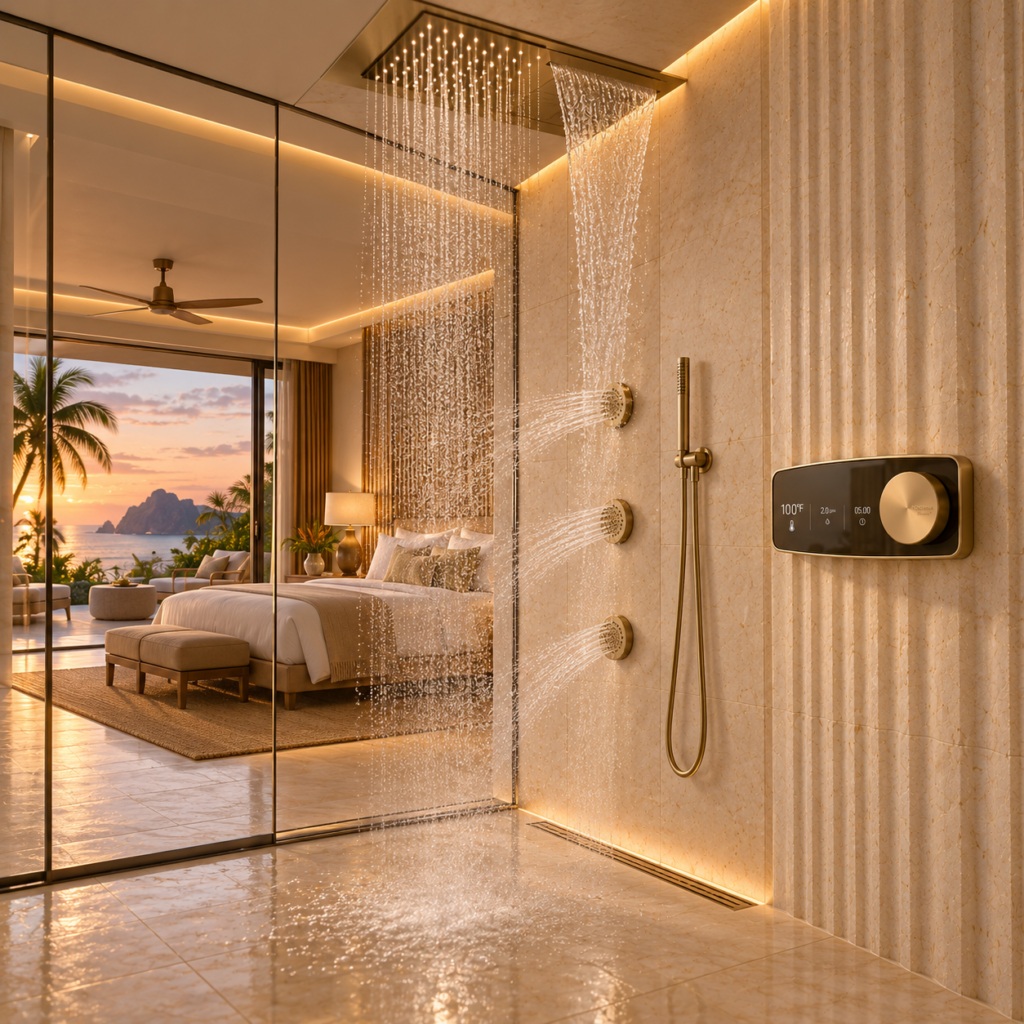
Neither wins outright. The correct answer is to assign rain heads to upper-tier and long-stay rooms where guest satisfaction scores justify the higher flow allowance, and handhelds to standard and high-turnover rooms where water cost per occupied night matters more than spray coverage. Splitting by tier, rather than standardizing the whole property, is what actually shows up in utility bills and capital budgets.
Explore Hotel Shower Configurations
Compare rainfall, handheld and dual-head arrangements. Each photograph and link opens the matching technical section in this article.
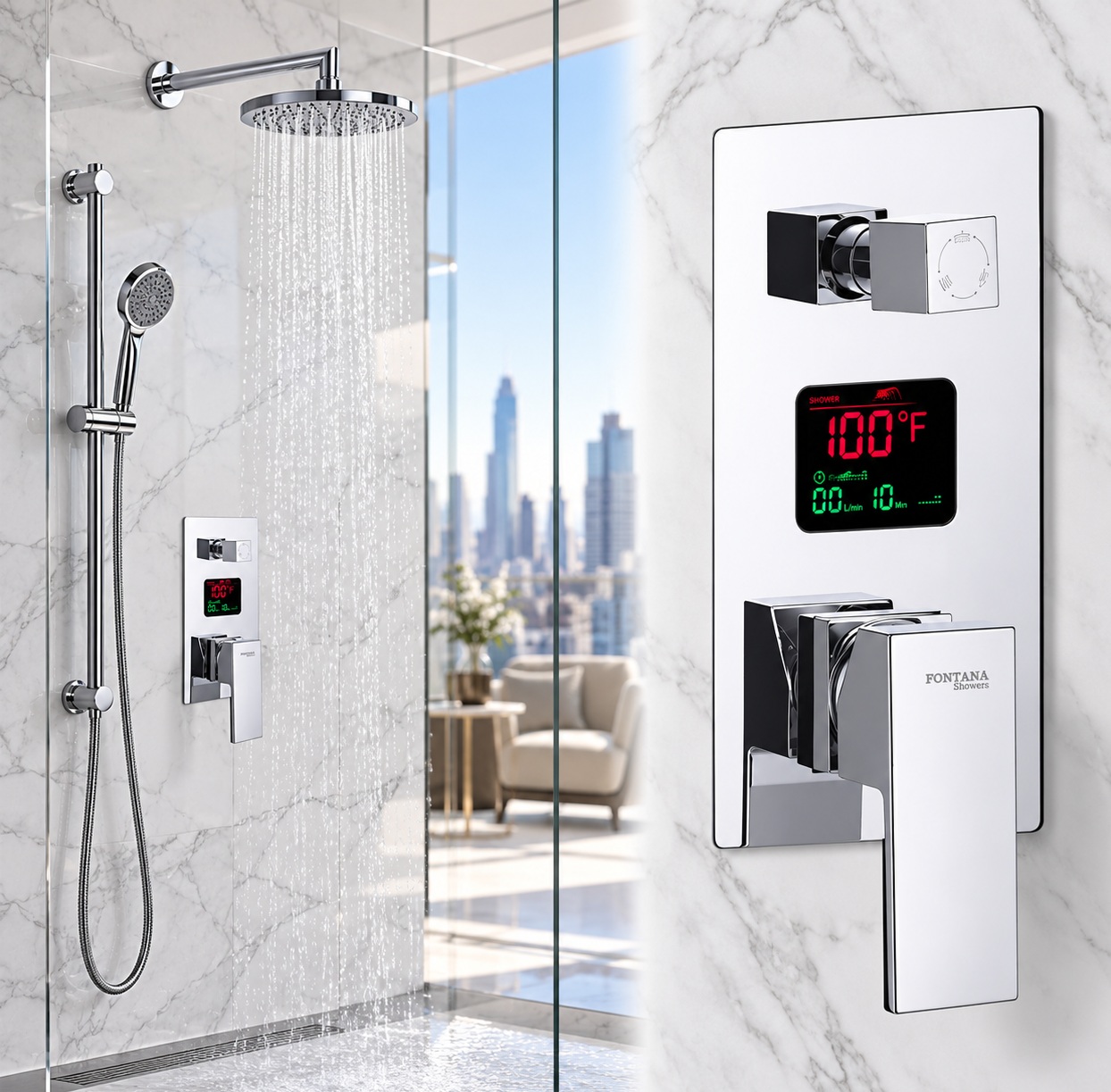
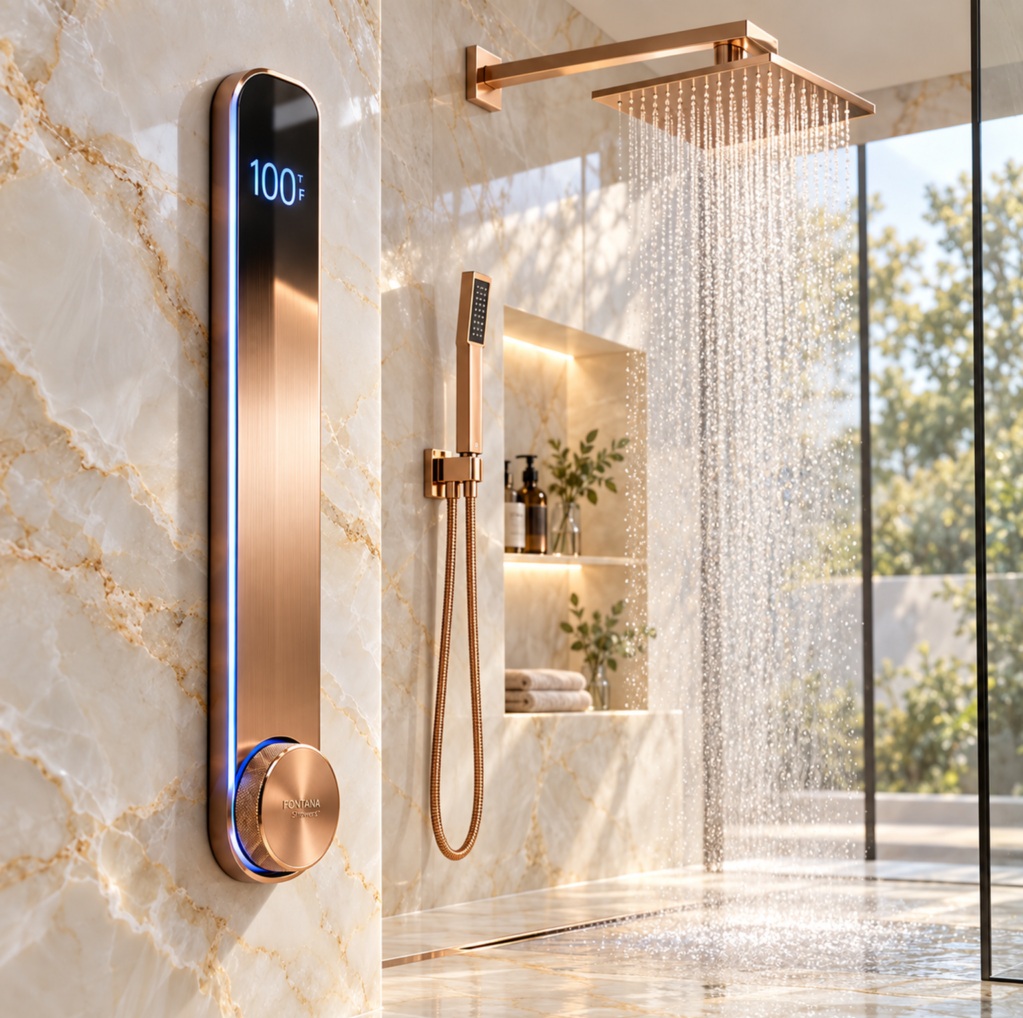
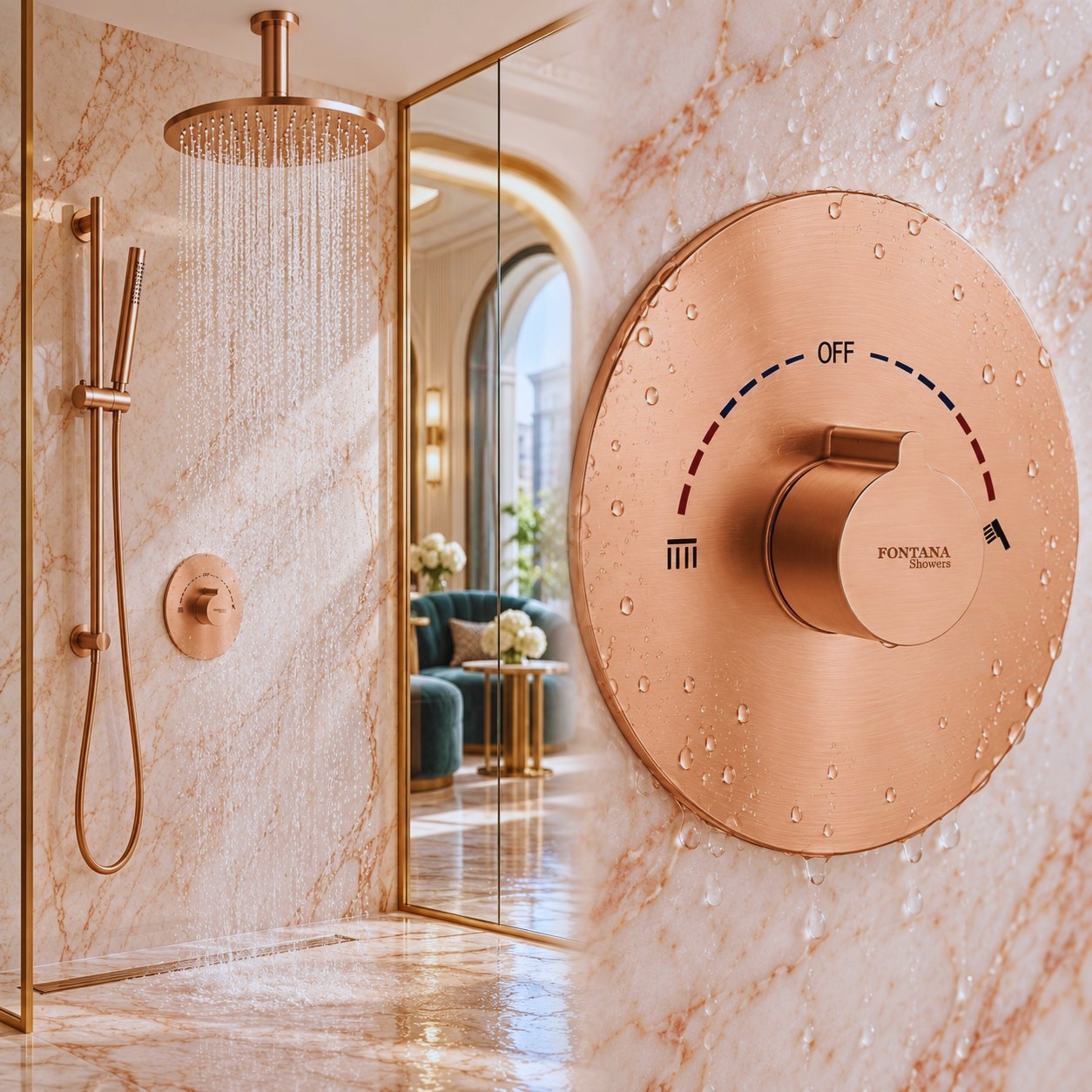
Dual-Head Systems
Diverter compatibility, retrofits and room-tier selection.
Read diverter retrofit analysisRain Heads: Guest Appeal vs Flow Rate
WaterSense-certified rain heads are capped at 1.8 gpm, against the federal maximum of 2.5 gpm for standard shower heads. Guests notice the wide spray pattern and low-pressure “waterfall” feel, and it consistently scores well on post-stay surveys for upscale and boutique properties. What guests don’t see is that the wide plate diameter (commonly 8 to 12 inches) demands more supply pressure to maintain even coverage at that reduced flow, which is why rain heads perform poorly on older buildings with sub-45 psi static pressure.
For procurement, the math is straightforward on paper: 1.8 gpm versus 2.5 gpm is a 28 percent reduction in flow per shower. Real-world savings run lower than that number suggests because guests in rooms with rain heads tend to run the shower longer, partly because the reduced pressure feels like it takes longer to rinse off soap and shampoo. Properties that have metered before and after a rain head rollout report the net water savings landing in the 10 to 18 percent range rather than the full 28 percent, depending on guest demographic and average shower duration.
Handhelds: Lower GPM, More Complaints
Handheld units are commonly rated 1.5 to 2.0 gpm at 80 psi, which puts them at or below the WaterSense rain head threshold in raw flow. They’re also cheaper to install, easier to retrofit onto existing arms, and better suited to guests who need to rinse a tub, wash a dog, or manage mobility issues without full ADA-grade accessible showers in every room.
The tradeoff shows up in guest satisfaction data, not water bills. Handheld-only rooms generate a disproportionate share of maintenance complaints tied to weak spray pressure, especially in older buildings where line pressure already sits at the low end of code minimums. Guests booking a $200-plus room and getting a 1.5 gpm handheld with no diffuser plate will complain regardless of the water savings story you could tell them. This is a satisfaction-per-dollar problem, not a plumbing problem, and it’s the reason blanket handheld policies backfire in upper-tier inventory.
Diverter Valve Retrofit Cost Compared
Adding a dual-head system, meaning a fixed rain head plus a handheld on a slide bar or wall mount, requires a diverter valve if the room doesn’t already have one. Retrofit cost depends on three variables: whether the existing valve body accepts a diverter cartridge swap, whether the wall requires new blocking to support a slide bar, and whether tile or surround material has to be cut and patched.
- Valve-only swap (existing rough-in supports a diverter cartridge): lowest labor cost, typically a single trade visit per room.
- Valve replacement plus new supply line: moderate cost, usually still a single-day job per room if the wall isn’t opened.
- Full valve and surround rework (wall opened, tile cut, blocking added): highest cost, and the line item that makes dual-head rollouts a capital project rather than a maintenance one.
Get a per-room quote from your plumbing contractor before committing to a property-wide dual-head standard. The difference between a valve-only swap and a full surround rework can be several multiples in labor alone, and that gap is exactly why some hotels standardize single-head fixtures in standard rooms and reserve dual-head systems for suites.
Matching Head Type to Room Tier
Almost every fixture on the market, rain, handheld, or combo, uses a 1/2 inch NPT thread at the supply connection, which means retrofit compatibility is rarely the limiting factor. Budget and guest expectation by tier are the real drivers. A practical tier structure looks like this:
| Room Tier | Recommended Head Type | Rationale |
|---|---|---|
| Standard / high-turnover | Single fixed head, 2.0-2.5 gpm | Lowest install and maintenance cost, guest expectation is functional not aspirational |
| Upgraded / preferred | Handheld with diffuser plate, 1.8-2.0 gpm | Balances water use with flexibility, addresses accessibility without full ADA remodel |
| Suite / long-stay | WaterSense rain head, 1.8 gpm, optionally dual-head | Satisfaction scores justify install cost, guests in this tier stay longer and shower more often |
When you’re evaluating replacement fixtures for a tiered rollout, comparing spray pattern, flow rate, and mount style side by side is worth the time before locking a PO. Reviewing a range of shower head options against your tier chart, rather than picking one SKU for the whole property, is what keeps the water-cost-versus-satisfaction tradeoff from becoming a guessing game.
Scale Buildup and Cleaning Labor
Rain heads have more surface area and more spray nozzles than standard heads, which means more nozzles to descale in hard water markets. A 10-inch rain plate with 100-plus spray points takes housekeeping or engineering staff measurably longer to clean than a single-pattern handheld head, and the wide flat plate shows mineral spotting more visibly to a guest checking in for a $300 night.
If your water hardness runs above roughly 7 grains per gallon, budget for either a quarterly acid-descale routine on rain heads or a point-of-use water softener at the fixture level. Handhelds with fewer nozzles and a smaller diffuser face take less labor to maintain, which is a real operating cost difference even though it rarely shows up in the initial purchase comparison.
Dual-Head Combo vs Single-Head Rule
Dual-head combos make sense where the room rate supports the install cost and where guest data shows enough repeat stays to amortize it, typically suites and long-stay rooms. For standard and midscale rooms, a single-head rule is almost always the better capital decision: lower install cost, lower maintenance labor, and a flow rate guests in that tier don’t scrutinize closely.
The mistake procurement teams make is treating this as a brand or aesthetic decision when it’s a room-tier cost model. Run the numbers per tier, not per property, and the rain-versus-handheld debate resolves itself.
Next Steps
Before writing a fixture spec for the next renovation cycle, pull three numbers: current static water pressure by floor, existing valve rough-in type in each room tier, and guest satisfaction survey data segmented by room category if you have it. Those three data points will tell you whether a rain head upgrade is a pressure problem waiting to happen, whether diverter retrofits are a valve swap or a wall-opening job, and whether the tier that’s complaining about water pressure is the same tier you’re about to upgrade. Loop in your plumbing contractor for a per-room labor quote before finalizing the tier assignments, since that number, more than the fixture price itself, is what decides whether a dual-head rollout pencils out.
Additional specification context
What Hotel Specifiers Should Check Before Selecting a Shower Head
Operating Pressure vs. Static Pressure
Static pressure is only a starting point. Check available pressure while the shower is running, accounting for valve losses, pipe sizing, elevation, and simultaneous demand. Consult manufacturer spray-performance and pressure data for each proposed model.
Guest Feedback and Room-Tier Economics
Segment guest feedback, maintenance calls and room revenue by category before specifying a uniform shower arrangement. Compare first cost, service access, replacement parts and potential downtime across the renovation cycle.
Accessibility and Valve Coordination
Handheld fixtures can support accessible bathing when installed as part of a compliant assembly. Confirm mounting, reach, controls and clearances against the applicable standards and project requirements.
Related Hotel Shower Engineering Research
Continue with relevant research published on HotelShowerHead.com. All three cards link to pages on this website.
Related questions
Frequently Asked Questions: Rain Heads vs Handheld Showers
Which shower type is best for hotel rooms?
The appropriate choice depends on room category, measured operating pressure, guest expectations, maintenance requirements, and retrofit feasibility. No single fixture type is ideal for every hotel.
Do rain shower heads always use more water?
No. Flow rate and shower duration determine total use. Compare the rated GPM and performance data for the exact fixtures under consideration.
What is the EPA WaterSense showerhead flow limit?
The WaterSense specification requires a maximum flow rate of 2.0 GPM, along with spray-performance requirements. A 1.8 GPM product may qualify but certification must be checked by model.
Can hotels combine rainfall and handheld showers?
Yes. Dual configurations require compatible switching or diverter arrangements, suitable supply conditions, and coordinated mounting and servicing access.
How should a hotel evaluate retrofit costs?
Compare the existing rough-in and valve configuration, wall access, labor, waterproofing repairs, fixture cost, and expected downtime for each room tier.
Are handheld shower heads automatically ADA compliant?
No. Accessibility depends on the complete installation, including mounting, reach, controls, clearances, and other applicable requirements.
What affects scale buildup and cleaning time?
Water hardness, nozzle design, fixture geometry, cleaning procedures, and access for service all influence maintenance labor.
What should be measured before upgrading showers?
Record static and operating pressure, existing valve types, and relevant guest feedback. Obtain room-level contractor quotes before deciding on a property-wide rollout.
Technical References
For flow-rate certification, consult EPA WaterSense showerhead criteria. For accessibility, consult the U.S. Access Board ADA standards. The original article text and original product link above remain unchanged.