Thermostatic Shower Panels in Modern AEC Specifications and Building Standards
Thermostatic shower panels are now widely specified in modern AEC projects because they support safer, more stable, and more comfortable bathing environments. Their role goes beyond appearance, helping projects meet practical performance goals in both residential and commercial settings.
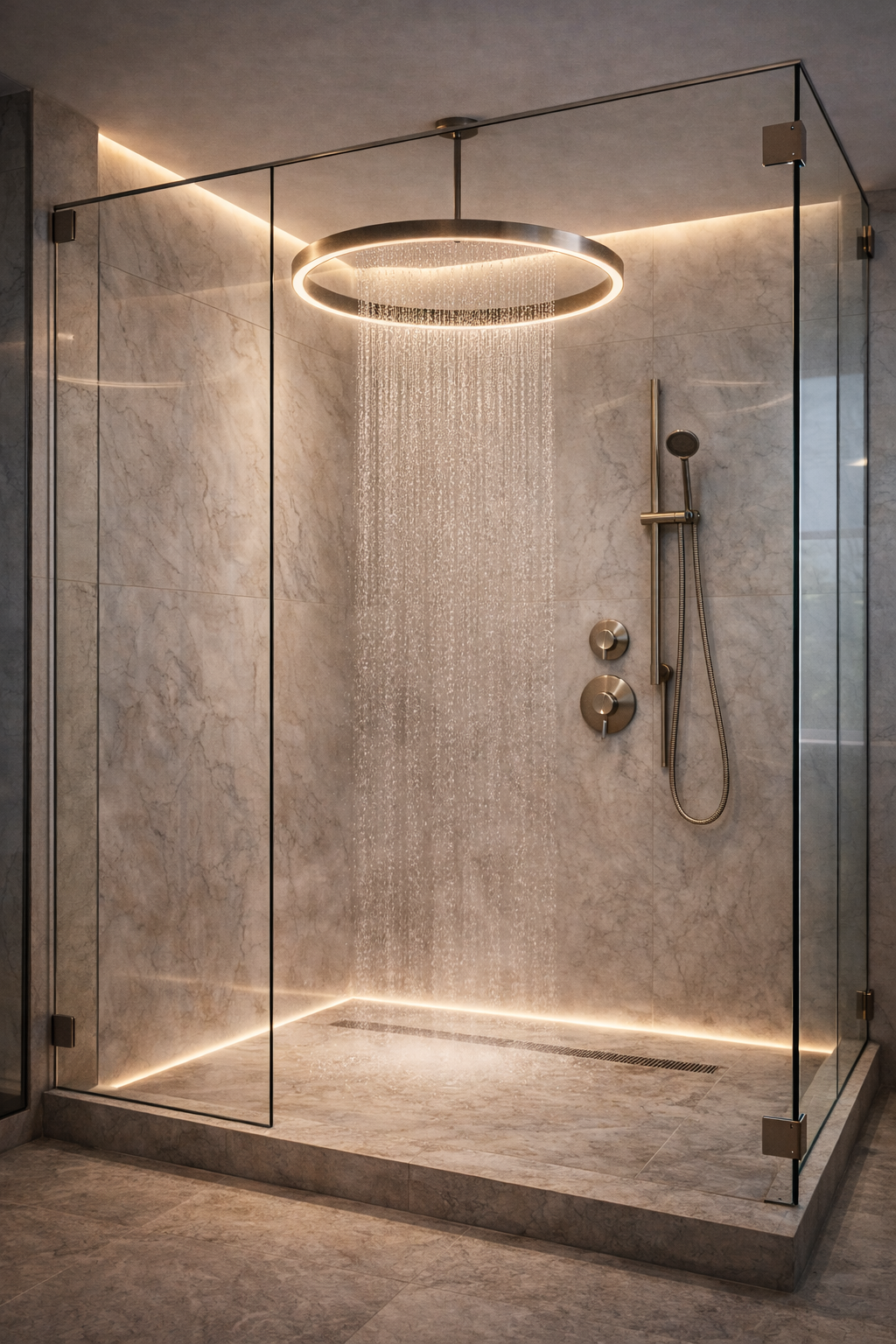
Stable Temperature Performance
In contemporary plumbing systems, thermostatic technology helps maintain a consistent water temperature even when supply pressure changes. This makes these panels especially valuable in multi-unit residences, hospitality projects, healthcare spaces, and other environments where multiple users may draw water at the same time.
By balancing hot and cold water automatically, these systems improve comfort while also helping reduce the chance of sudden temperature swings during use.
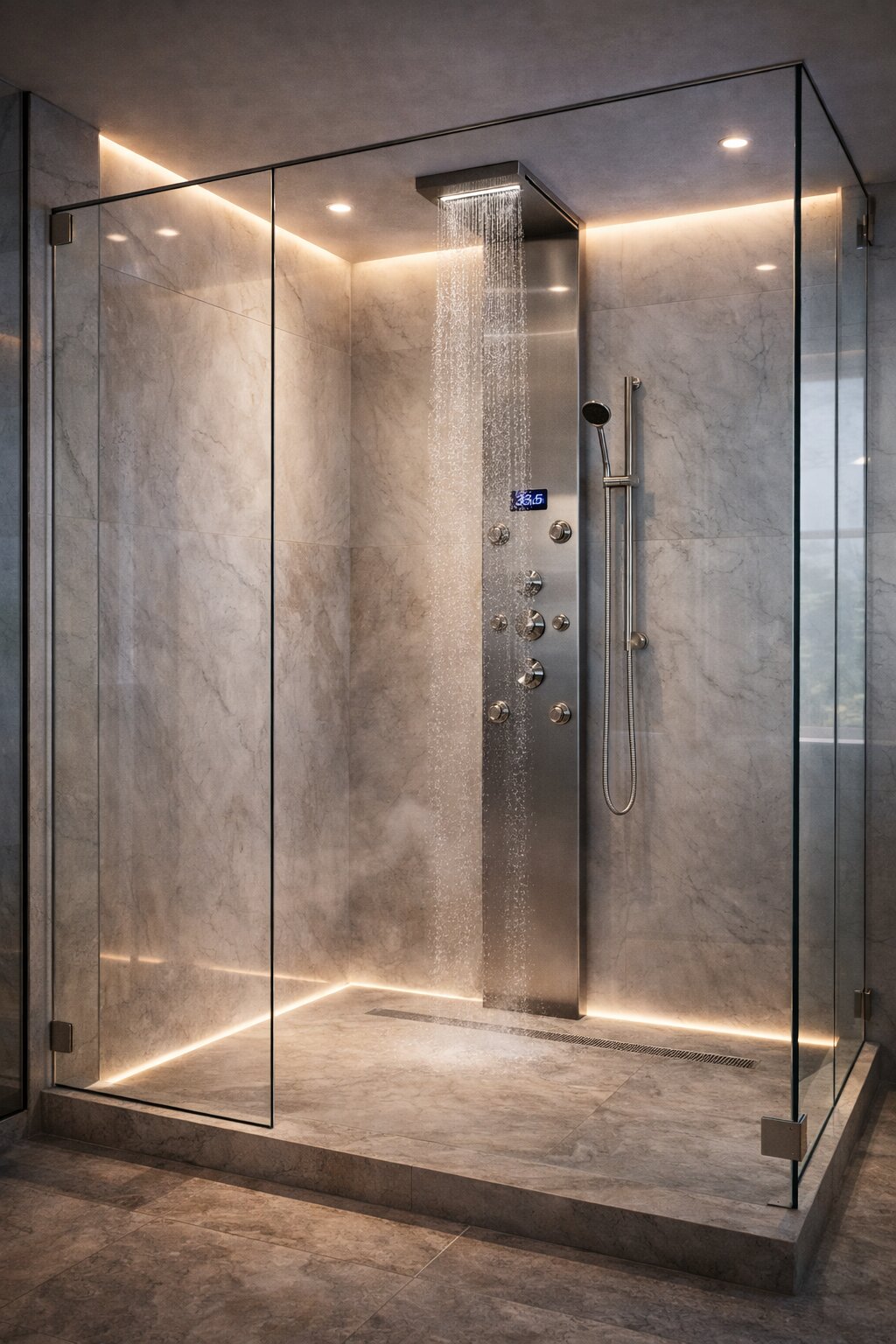
Strong Fit for Modern Design Standards
Architects and designers continue to specify thermostatic shower panels because they combine performance with a clean, minimal layout. Instead of relying on several exposed fittings, the system brings key shower functions into one organized vertical format.
This approach supports streamlined bathroom planning and works well with current design expectations that prioritize efficiency, neat detailing, and user-focused functionality.
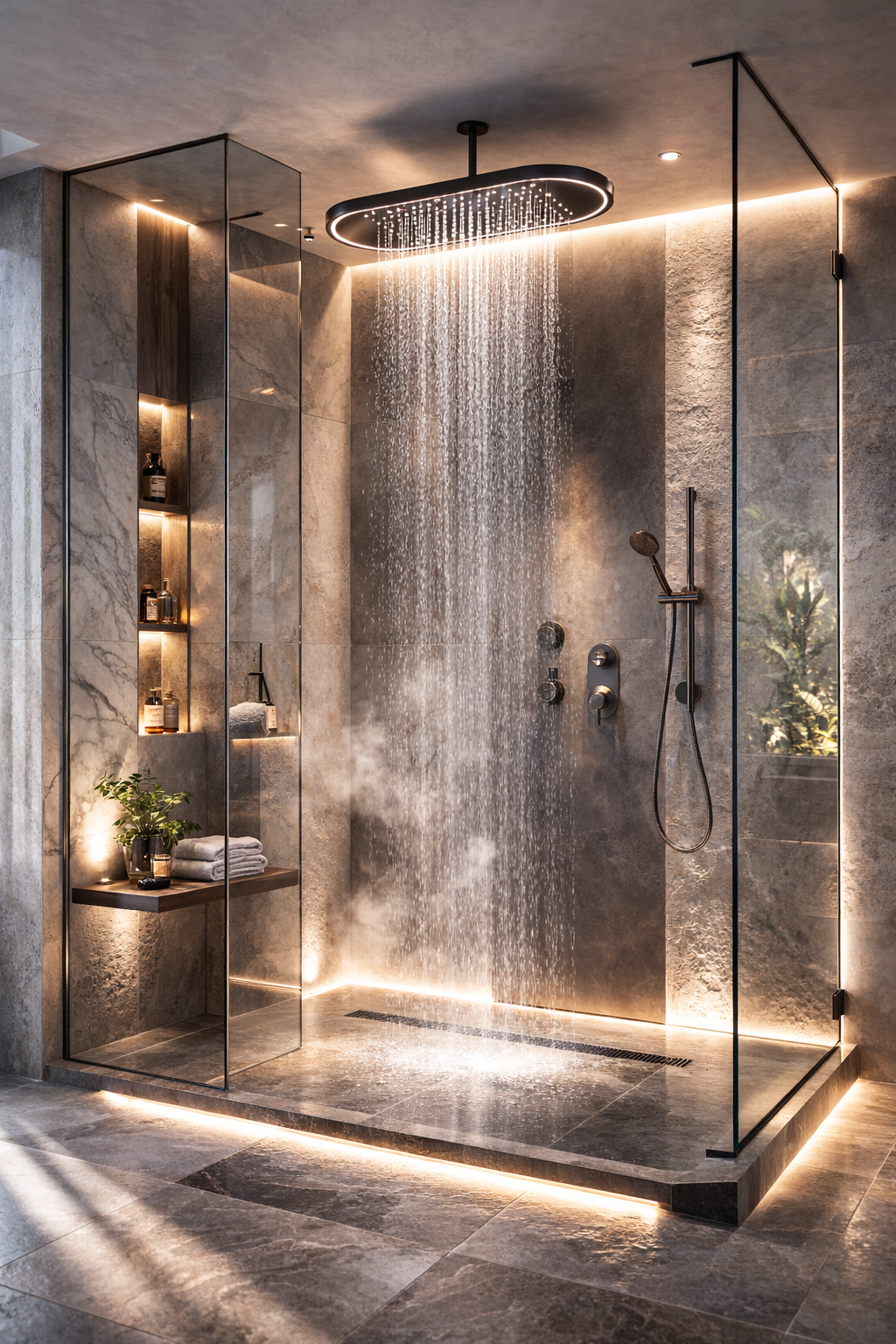
Integrated Wellness and Water Efficiency
Advanced options such as thermostatic massage shower panels can combine rainfall showerheads, handheld sprayers, and body jets within one system. This integrated configuration supports a premium shower experience while keeping the layout visually simple.
These systems can also contribute to water-conscious design by improving flow control and limiting waste caused by unstable temperature adjustments, making them a strong match for projects focused on sustainability and long-term usability.
As building standards continue to emphasize safety, dependable performance, and better user experience, thermostatic shower panels are increasingly treated as a practical specification choice rather than an optional upgrade. Their ability to align engineering function with modern bathroom design makes them relevant across a wide range of current construction and renovation projects.