
ADA Handheld Showers: Requirements & Retrofit Costs
For hotel accessibility planning, evaluate a handheld shower with a hose at least 59 inches long, a suitable shower spray unit, accessible controls, and a compatible temperature-control valve. Verify each installation against the applicable 2010 ADA Standards, adopted plumbing code, and manufacturer specifications. Flow-rate selection affects operating costs, but compliance depends on the complete shower configuration—not GPM alone.
ADA Hose Length and Mount Height Rules
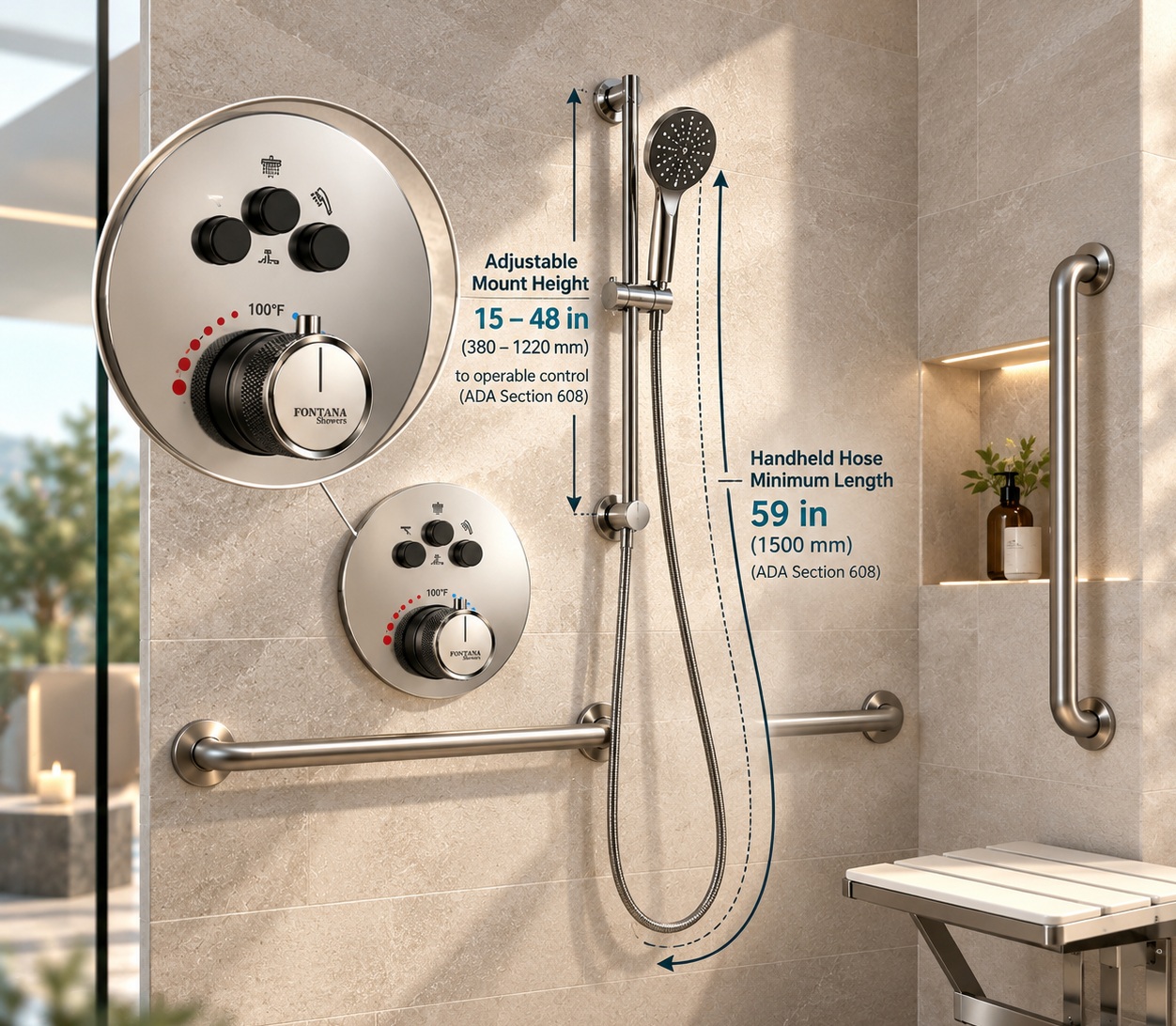
ADA Standards require a hose of at least 59 inches (1500mm) on any handheld unit installed in a transfer-type or roll-in shower compartment. This isn’t a suggestion tied to guest comfort; it’s the minimum length needed for a seated user to direct spray across the full body without repositioning the mounting bracket. Shorter hoses sold as “handheld” fixtures for standard retail bathrooms do not meet this spec and will fail an accessibility audit even if the head itself is otherwise compliant.
Control and shower-spray-unit locations depend on the shower compartment type under ADA Section 608. General reach ranges do not replace the specific installation requirements for transfer-type and roll-in showers. Procurement teams sourcing a single SKU across a property should confirm hose length, control positions, and mounting arrangements against the applicable shower type and manufacturer documentation.
Technical reference: U.S. Access Board — ADA Section 608
GPM Limits: Code Minimums vs WaterSense
Federal law caps shower head flow at 2.5 GPM at 80 psi. California and a handful of other states drop that to 1.8 GPM. WaterSense-labeled showerheads have a maximum rated flow of 2.0 GPM while still passing spray force and coverage testing. For ADA rooms specifically, there’s no code requirement to use a lower-flow head than the rest of the property, but there’s also no functional reason not to, since the hose and mount rules apply regardless of GPM.
The math that matters for procurement is per-room annual water use, not per-fixture flow rate alone. A property running 2.5 GPM heads across 20 accessible rooms with average 8-minute showers and 1.5 showers per occupied night uses 9 gallons more per occupied room-day than a 1.75 GPM low-flow equivalent, before you factor in the energy to heat that water. Multiply by occupancy and the gap between “legal” and “efficient” becomes a line item, not a rounding error.
| Flow Rate | Standard | Typical Use Case |
|---|---|---|
| 2.5 GPM | Federal maximum | Legacy fixed heads, non-labeled handhelds |
| 1.8 GPM | California/state max | State-mandated retrofit minimum |
| 1.75 GPM | Low-flow option (below the 2.0 GPM WaterSense maximum) | Recommended for accessible rooms and full-property standardization |
Technical reference: EPA WaterSense Showerheads
Pressure-Balance Valves and Anti-Scald Compliance
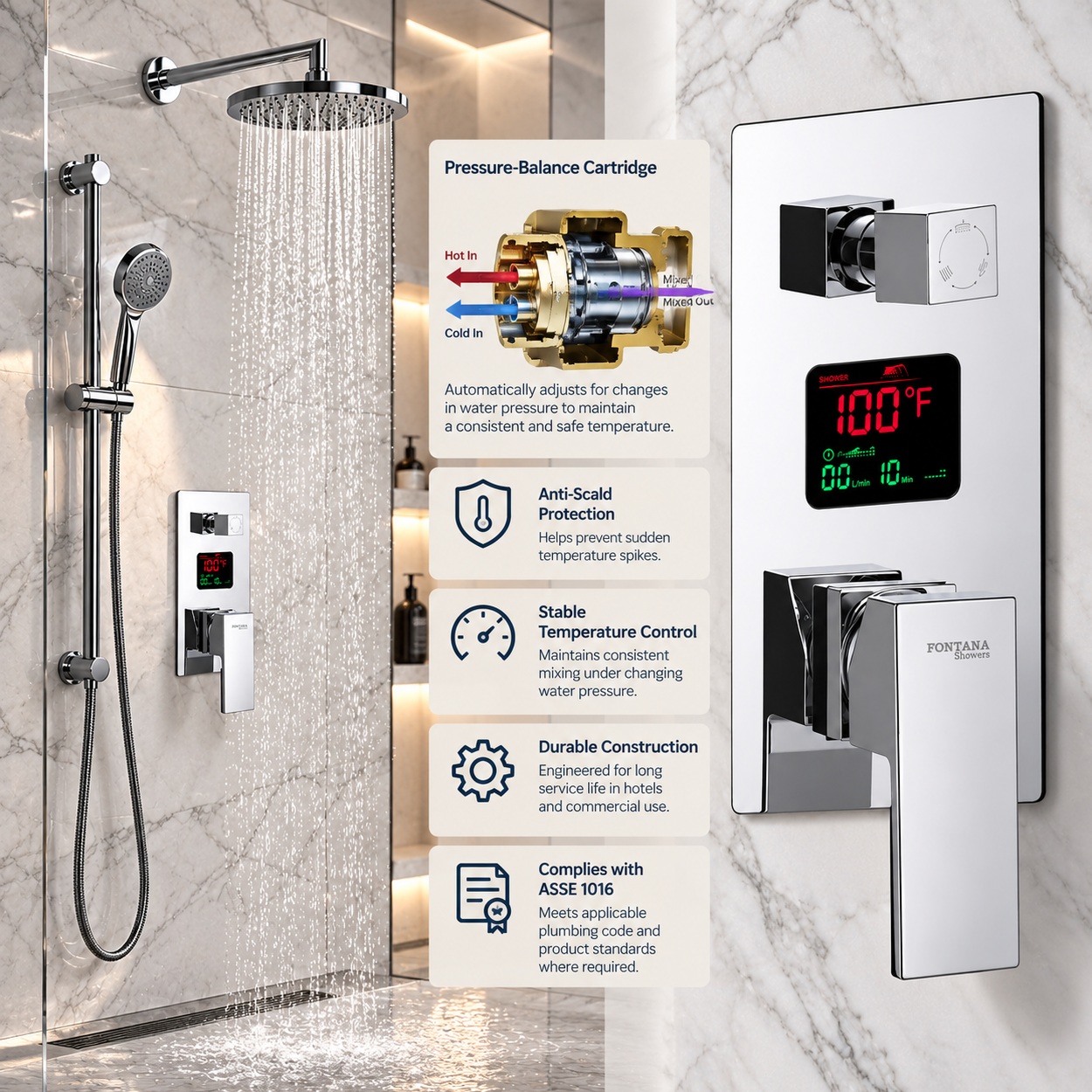
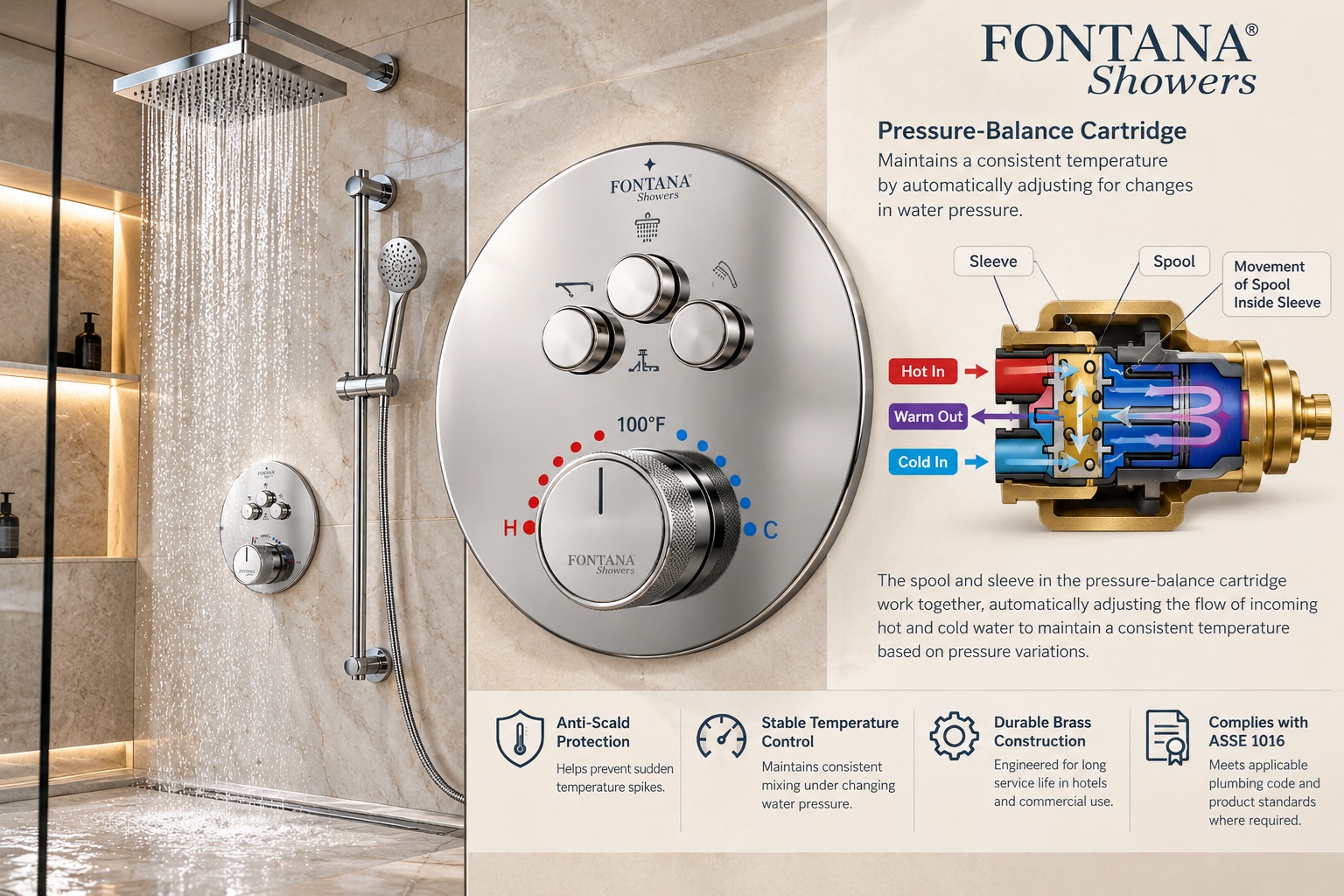
Shower temperature protection should be selected to meet the adopted plumbing code and applicable product listings, including ASSE 1016 where required. This isn’t unique to accessible rooms, most modern plumbing codes require it property-wide, but it becomes a hard compliance point in ADA units because a guest with limited mobility or sensation has less ability to react to a sudden temperature spike from someone flushing a toilet elsewhere in the building.
When you’re speccing a lower-flow head, confirm the valve is rated to perform at that flow rate. Some older pressure-balance cartridges were calibrated for 2.5 GPM flow and can behave erratically, hunting between hot and cold, when paired with a 1.75 GPM head that changes the flow dynamics through the valve body. Ask your valve manufacturer for a compatibility statement before locking in a low-flow retrofit across multiple rooms.
Technical Verification Checklist
- Confirm the installed valve’s manufacturer, model and applicable ASSE 1016 listing.
- Verify the minimum operating flow and pressure requirements against the proposed low-flow showerhead.
- Inspect the pressure-balance cartridge for wear, sticking, mineral accumulation or deterioration.
- Confirm the temperature-limit stop is correctly adjusted according to manufacturer instructions and applicable code.
- Test mixed-water temperature stability during changes in hot- and cold-water supply pressure.
- Have a qualified plumbing professional verify compatibility before a property-wide retrofit.
Pressure-balancing devices respond to supply-pressure changes, while thermostatic devices regulate mixed-water temperature through a different control mechanism. The selected valve must be evaluated according to its actual listing and manufacturer specifications.
Note: ADA Section 608 addresses accessible shower configuration and controls. Valve performance and anti-scald product compliance must also be checked against applicable plumbing codes, product listings and manufacturer documentation.
Guest Comfort at Lower Flow Rates
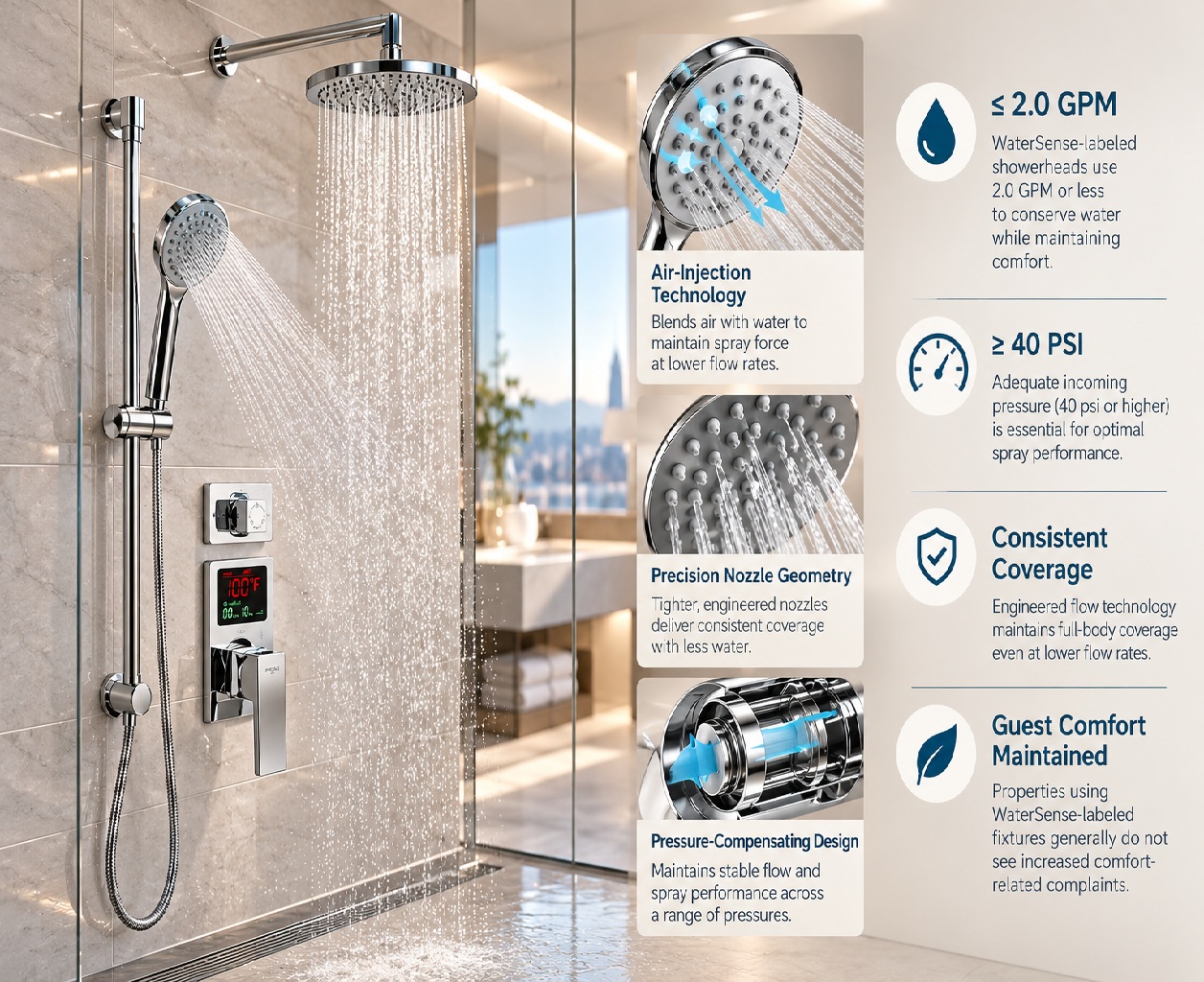
WaterSense-labeled heads at 2.0 GPM or less are engineered with tighter nozzle geometry and air-injection or pressure-compensating designs specifically to maintain spray force and coverage despite the reduced volume. Guest complaint data across properties that have made this switch generally shows no meaningful increase in comfort-related complaints when the retrofit uses a labeled fixture rather than a generic low-flow aerator design. The complaints that do show up are almost always tied to inadequate incoming pressure (below 40 psi at the fixture), not the GPM cap itself.
If your property has known low-pressure zones, address that at the manifold or booster pump level before assuming a higher-GPM head is the fix. Throwing more water at a pressure problem wastes water without solving the guest experience issue.
Technical reference: EPA WaterSense Showerheads
Retrofit Cost per Accessible Room
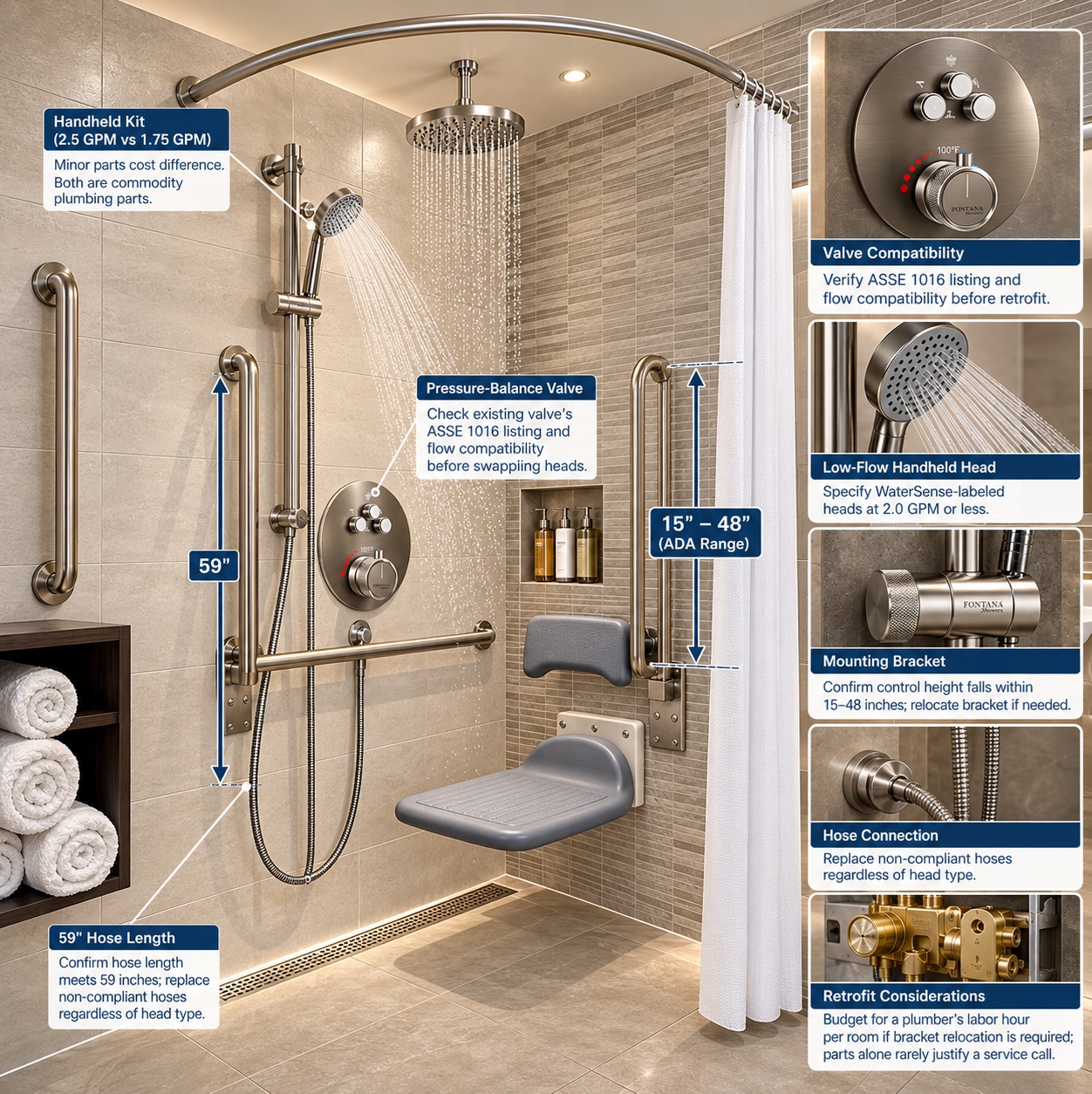
The parts cost difference between a 2.5 GPM handheld kit and a 1.75 GPM low-flow equivalent with matching ADA hose length is typically minor, both are commodity plumbing parts in the same price tier. The real cost variable is whether your existing pressure-balance valve needs replacement to be flow-compatible, and whether the mounting bracket needs relocation to hit the 15-48 inch reach range if the current installation predates a full ADA review.
Rooms undergoing a full bathroom renovation are the cheapest place to make this change, since the valve and bracket work is already budgeted. Retrofitting a single fixture in an otherwise untouched bathroom, without addressing valve compatibility, is where costs creep because you’re paying for a service call to fix one part instead of amortizing labor across a full room turn.
Technical reference: U.S. Access Board — ADA Section 608
Accessible Shower Retrofit Checklist
- Confirm hose length meets 59 inches; replace non-compliant hoses regardless of head type.
- Verify control placement against the applicable ADA requirements for the shower compartment type; relocate controls or brackets where necessary.
- Check the existing valve’s ASSE 1016 listing and flow compatibility before swapping heads.
- Specify WaterSense-labeled showerheads rated at 2.0 GPM or less where appropriate for the accessible room configuration.
- Budget for plumbing labor and possible mounting adjustments; obtain a project-specific estimate before ordering fixtures in volume.
Diverter and Cartridge Choices That Matter
Selecting the right shower diverter and valve cartridge is an important part of hotel bathroom specification and maintenance. For accessible guest rooms, procurement teams should evaluate outlet configuration, temperature protection, low-flow compatibility, replacement-part availability and long-term service requirements before approving a shower assembly.
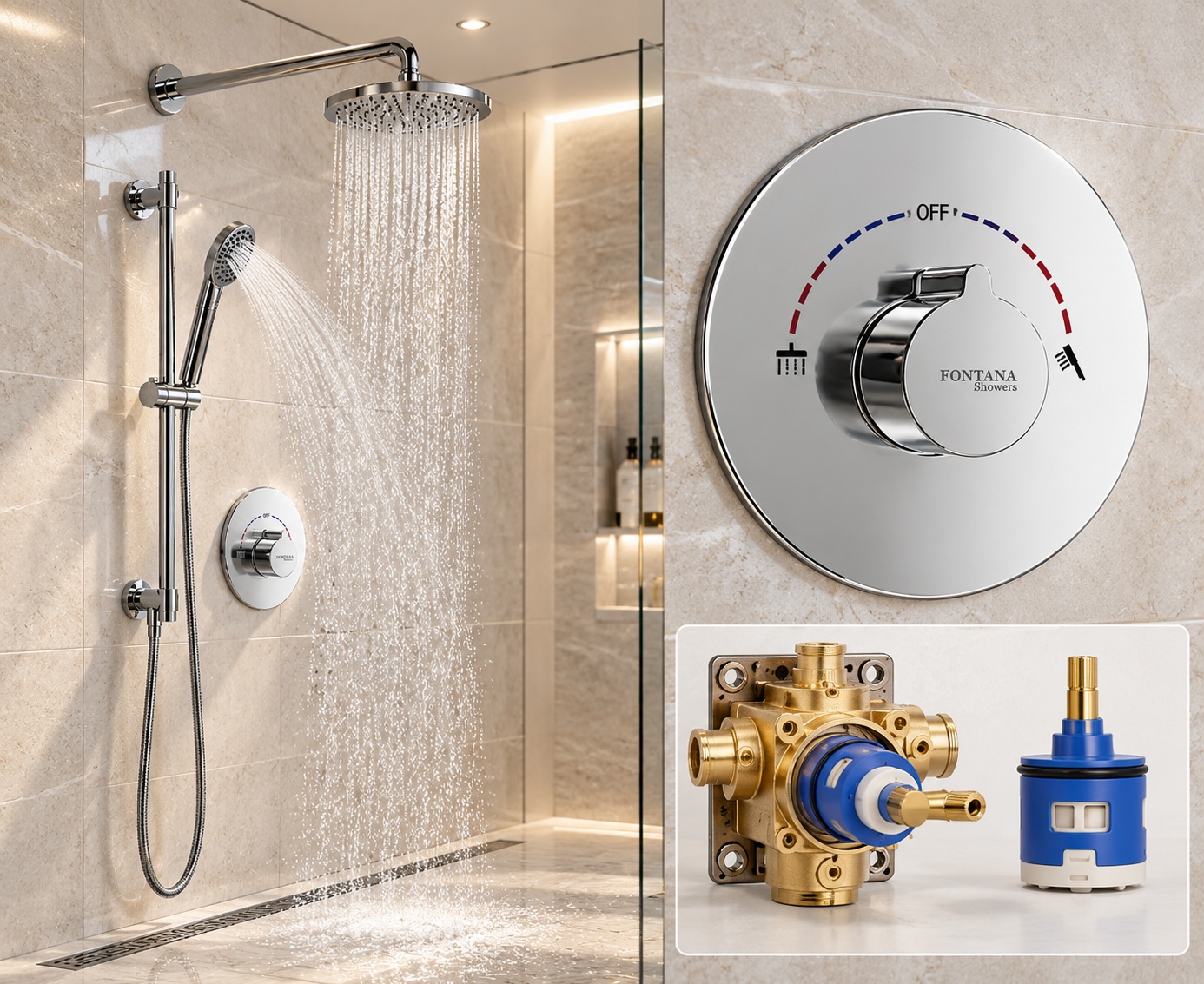
Matching Diverter Controls to Shower Functions
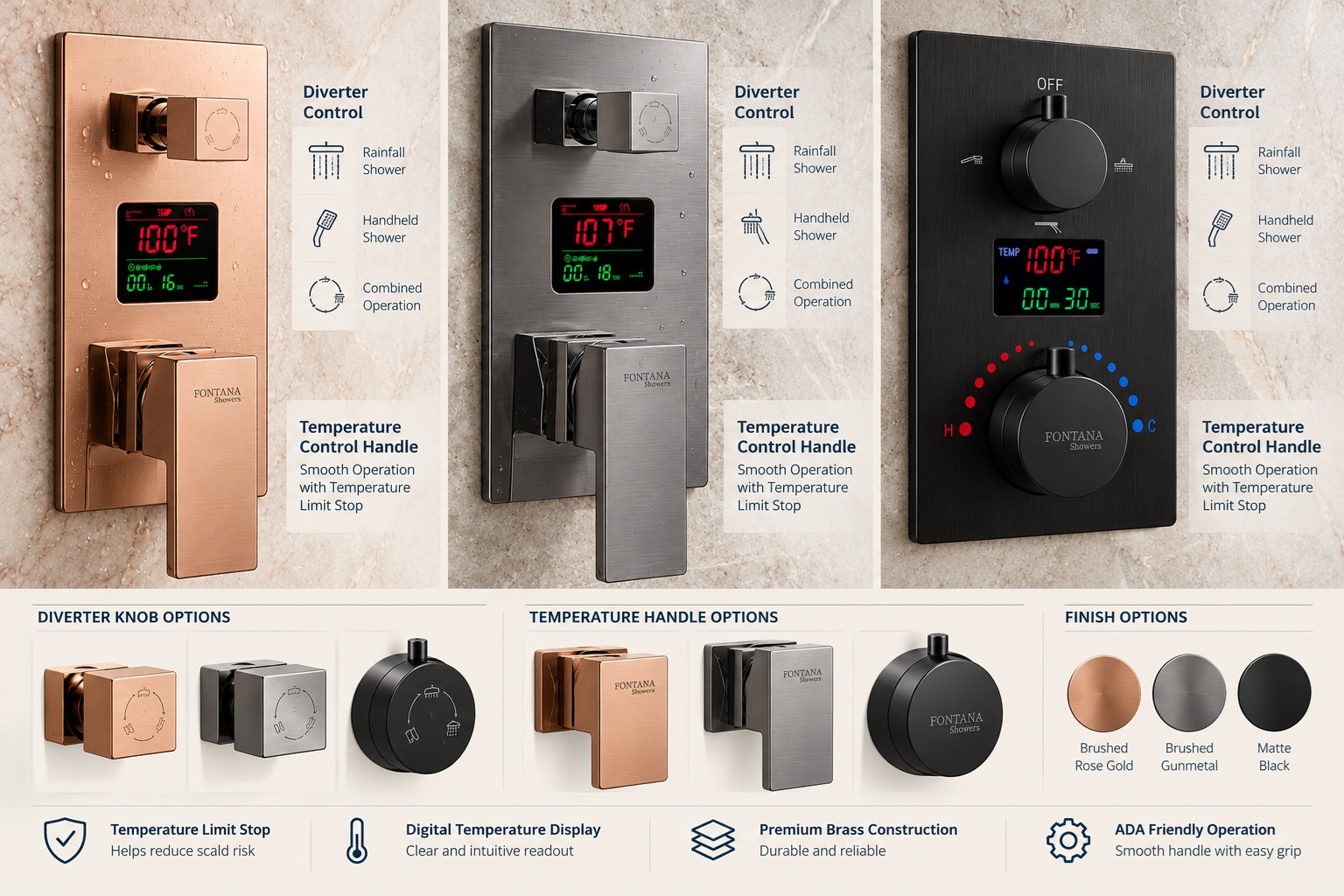
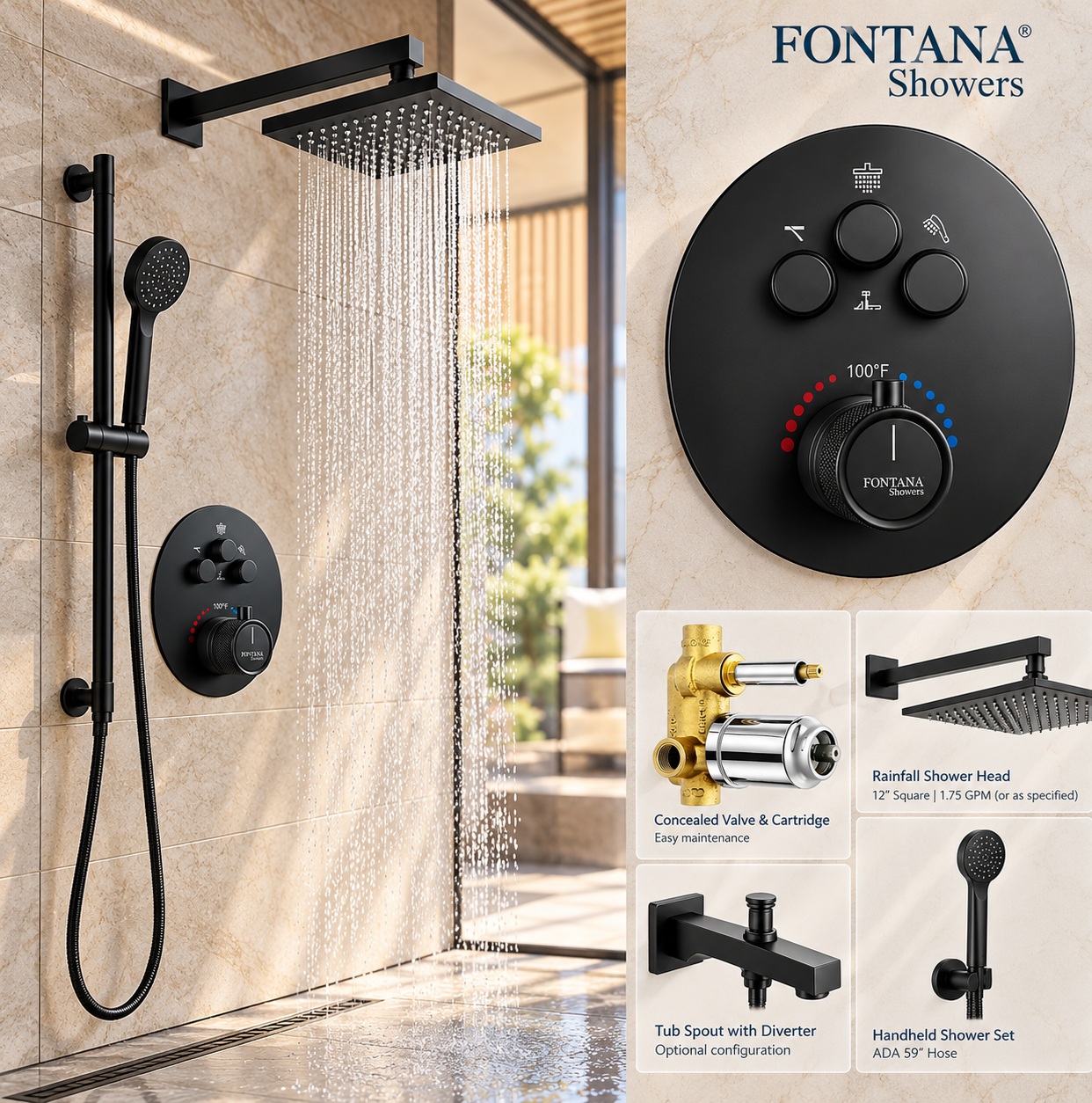
Diverter valves direct water between shower outlets such as a fixed rainfall head and a handheld shower. A properly specified assembly should identify the supported outlet combinations, the required supply pressure and the manufacturer’s rated operating flow.
A showerhead rated at 1.75 GPM does not automatically receive 2.5 GPM simply because the upstream diverter has a higher flow capacity. However, the complete valve assembly must still be evaluated for stable operation at the intended flow rate.
Explore Technical Specifications
Technical references: U.S. Access Board — Shower Compartments | EPA WaterSense Showerheads
Thermostatic Cartridges and Temperature Protection
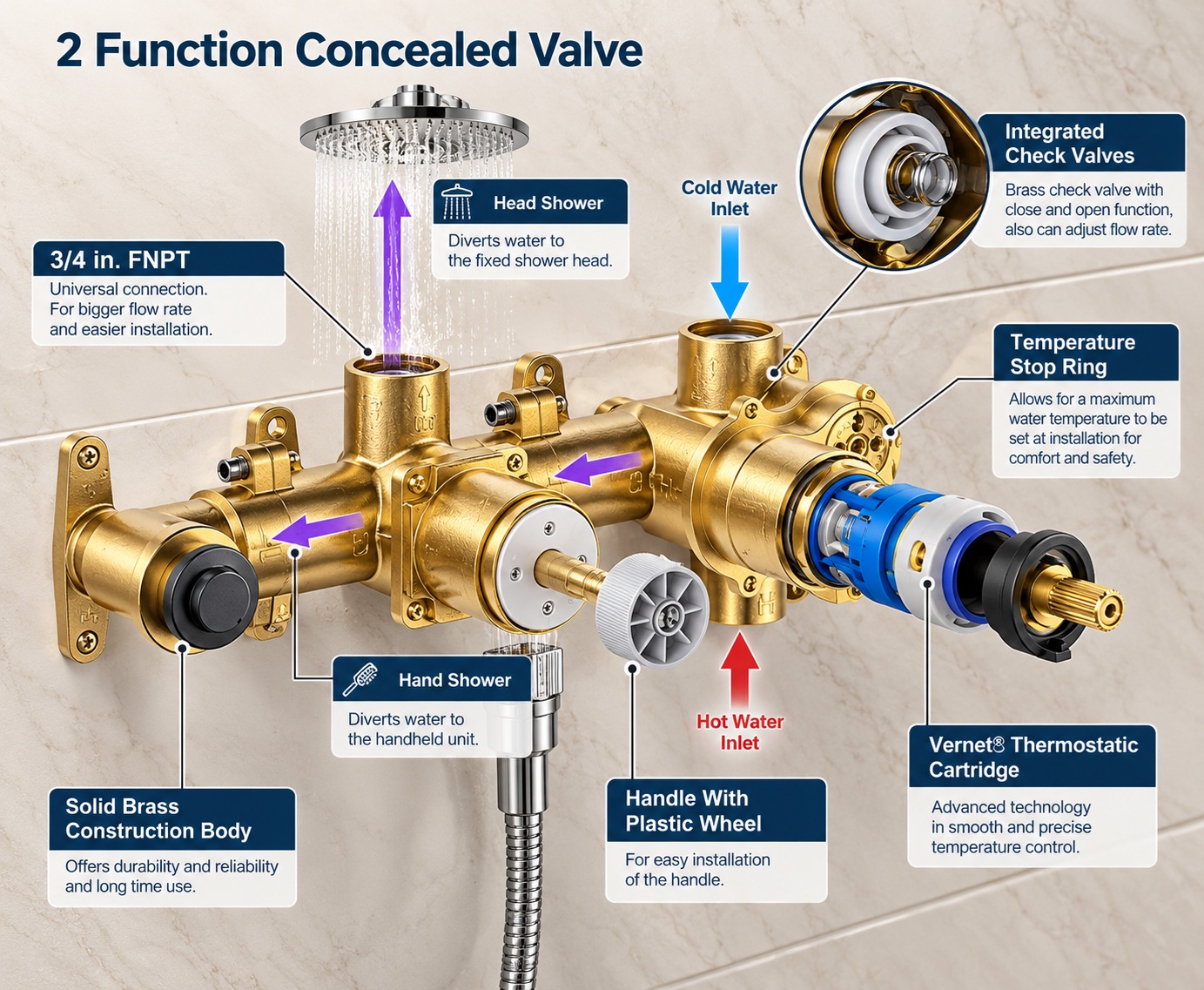
Concealed shower valves integrate water-mixing and outlet-control components behind the finished wall. Depending on the design, the system may use a pressure-balancing cartridge, thermostatic cartridge or separate diverter mechanism.
Thermostatic valves regulate mixed-water temperature, while pressure-balancing valves respond to changes in supply pressure. Their performance and suitability depend on the specific product, installation conditions and applicable plumbing code.
Explore Technical Specifications
Technical references: ASSE International | IAPMO — Plumbing Standards and Certification
Cartridge Replacement and Lifecycle Planning
Cartridge-style pressure-balance valves can simplify maintenance when replacement parts are readily available and the valve can be serviced from the finished side of the shower wall.
Thermostatic assemblies may provide tighter temperature regulation, but the purchase price, service procedures and cartridge replacement costs vary by manufacturer. Hotel operators should compare documented lifecycle costs rather than assume one valve technology is universally cheaper to maintain.
- Confirm replacement cartridge model and availability.
- Verify minimum flow and operating pressure compatibility.
- Review diverter outlet configurations and service access.
- Check temperature protection and product certification.
- Document installation and maintenance requirements.
Explore Technical Specifications
Technical references: U.S. Access Board — ADA Section 608 | ASSE International
Frequently Asked Questions About ADA Handheld Showers
Key considerations for hotel owners, facility managers, and contractors specifying accessible shower systems.
What is the minimum hose length for an ADA-compliant handheld shower?
Under the 2010 ADA Standards, accessible shower compartments generally require a handheld shower spray unit with a hose at least 59 inches long. The assembly must also meet applicable requirements for operation and accessibility.
How much does it cost to retrofit a hotel room with an ADA handheld shower?
Retrofit costs depend on the existing plumbing, valve compatibility, mounting locations, labor rates, and whether additional accessibility modifications are necessary. A handheld shower replacement is generally less complex than a project requiring valve relocation or wall modifications.
Are low-flow handheld shower heads suitable for accessible hotel rooms?
Yes. A properly selected low-flow handheld shower can support water conservation while maintaining practical shower performance. Verify the product’s rated flow, available water pressure, valve compatibility, and applicable accessibility requirements before installation.
Do ADA hotel showers require anti-scald protection?
Accessible shower installations must comply with applicable temperature-control and plumbing requirements. Specify suitable pressure-balancing or thermostatic protection where required, and verify the assembly against the adopted plumbing code and relevant product standards.
What should hotel operators inspect before upgrading accessible shower fixtures?
Inspect hose length, accessible reach and operating controls, mounting configuration, valve performance, water temperature protection, and the condition of existing plumbing. Confirm the installation against the applicable ADA Standards and local building requirements before ordering fixtures in bulk.