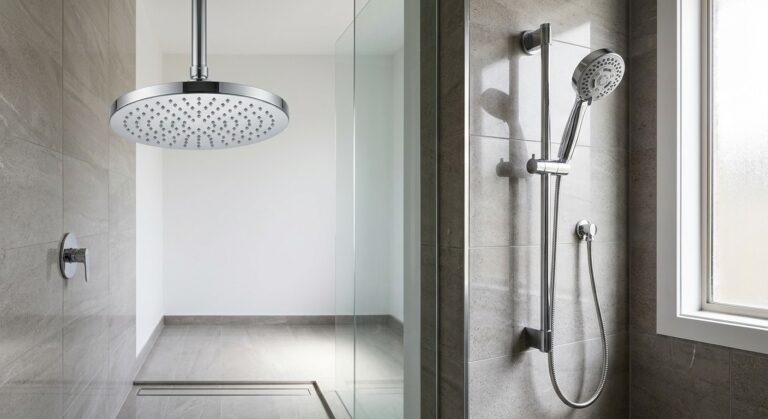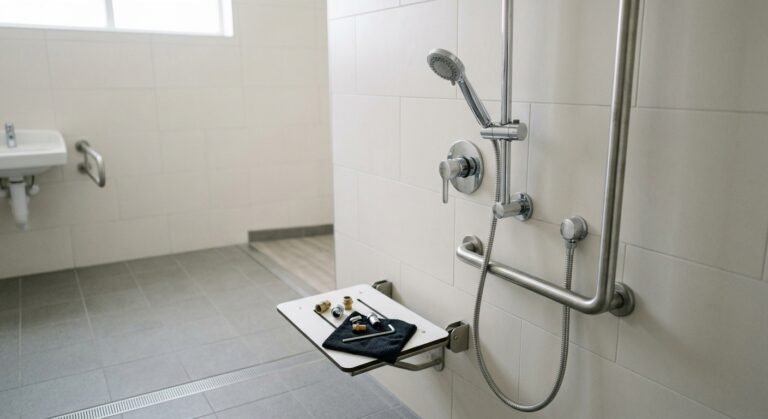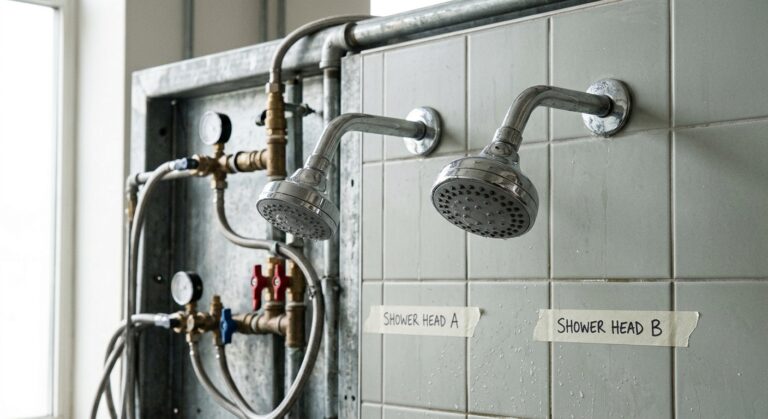
Two ASSE standards govern scald protection in hotel showers, and most properties need both, not one or the other: ASSE 1016 (now often referenced as ASSE 1016/ASME A112.1016) covers the shower valve itself, while ASSE 1070 covers point-of-use outlet devices and master mixing. IPC 424.3 sets the hard ceiling: shower outlet water cannot exceed 120°F (49°C) in most jurisdictions. The valve type you choose determines how close to that ceiling your guests feel the spray, and that gap is where comfort complaints live.
ASSE 1016 vs 1070: What Applies to a Hotel Shower
ASSE 1016 is the valve-level standard. It applies to the shower or tub/shower valve itself and requires the valve to limit temperature swings at the outlet when supply pressure or temperature fluctuates, such as when a toilet flushes elsewhere on the riser. Every shower valve installed in a hotel renovation or new build should carry an ASSE 1016 listing (or the equivalent ASME A112.18.1 designation used on newer cartridges).
ASSE 1070 applies further downstream, at the point of use, and is more commonly invoked for lavatory faucets, tempering valves, and master mixing stations that blend hot water before it reaches multiple fixtures. Some jurisdictions require a 1070-listed tempering valve at the water heater or manifold level in addition to 1016 valves at each shower, particularly in high-occupancy buildings. Check with your local plumbing code official before assuming one standard covers both scopes. Properties that mix valve brands or vintages across renovation phases should audit each room against both standards rather than assuming a prior inspection covered it.
Scald Thresholds: Temperature and Exposure Time
The numbers that matter for liability documentation:
- IPC 424.3 caps shower outlet temperature at 120°F (49°C) in occupancies covered by the code, which includes hotels.
- Water at 140°F causes a third-degree burn in about five seconds of contact.
- At 120°F, the same injury takes roughly five minutes of continuous exposure, which is the margin the code is built around.
- Below 120°F, the time-to-injury curve extends further, which is why some risk managers push for 110 to 115°F caps in senior living or extended-stay properties with higher vulnerability populations.
The code minimum is a floor, not a target. A property defending itself after a scald claim will have a much stronger position if the installed and verified outlet temperature sits at or below 120°F with documentation, rather than relying on an assumption that the valve was set correctly at installation and never drifted.
Thermostatic vs Pressure-Balance Cartridges
Both valve types satisfy ASSE 1016, but they solve the problem differently, and the difference affects guest-perceived water quality.
A pressure-balance valve uses a sliding piston or diaphragm that responds to changes in supply pressure between the hot and cold lines. If cold pressure drops, the piston shifts to restrict hot flow proportionally, keeping the mix ratio roughly stable. It does not sense actual temperature, only pressure differential. This means a pressure-balance valve can still deliver a temperature shift if the incoming hot water temperature itself changes, such as during a recovery cycle on an undersized water heater serving multiple rooms.
A thermostatic cartridge uses a wax or bimetal element that expands and contracts with actual water temperature, adjusting the hot/cold mix to hold a set output temperature regardless of pressure or supply temperature swings. Thermostatic valves hold tighter tolerance, typically within 1 to 2°F of the set point, compared to pressure-balance valves which can swing 3 to 5°F under real-world supply conditions. For properties running central boiler plants with simultaneous demand across many rooms, that tighter tolerance translates directly into fewer guest calls about sudden temperature shifts.
Thermostatic cartridges cost more per valve and require periodic recalibration, usually annually or per manufacturer spec, since the thermostatic element can drift out of calibration over years of use. Pressure-balance valves are simpler mechanically and have fewer parts to recalibrate, but they offer no protection against supply-temperature drift, only pressure drift.
Guest Complaints at Safe Temperature Caps
120°F feels noticeably cooler than the 125 to 130°F many guests set at home, where residential code either does not cap outlet temperature or caps it higher depending on jurisdiction. This is the tradeoff procurement teams often miss until review scores start reflecting it: a valve set correctly to code will generate a measurable rate of “water wasn’t hot enough” comments, particularly from guests accustomed to higher home settings or arriving from colder climates.
The fix is not raising the cap past 120°F, which creates direct liability exposure. Instead, properties get more perceived heat at the same outlet temperature by improving how the spray delivers that water. A higher-quality head with a tighter spray pattern and better droplet density transfers heat to skin more efficiently than a diffuse, misting pattern, so the same 120°F feels warmer on contact. This is also where pairing a compliant valve with a properly matched head matters: a full shower valve and head sets system, selected together rather than mixed from different product lines, reduces the chance of pressure or flow mismatches that make a code-compliant valve feel worse than it has to.
Retrofit Cost by Room Tier
Per-room retrofit cost depends heavily on whether the existing valve body is being replaced or just the cartridge, and whether wall access requires tile demolition. Figures below are planning ranges, not quotes, since labor rates and access conditions vary by market and building age.
| Room Tier | Scope | Primary Cost Driver |
|---|---|---|
| Standard guest room | Cartridge swap only, existing valve body reused | Labor time, no tile work |
| Standard guest room | Full valve body replacement | Tile demolition and patch, access panel if none exists |
| Suite / ADA room | Thermostatic upgrade with separate volume control | Additional rough-in work, higher-spec cartridge cost |
| Spa / amenity shower | Multi-outlet thermostatic system with body jets | Valve complexity, often requires dedicated mixing valve upstream |
Properties doing a phased renovation should prioritize rooms with the oldest cartridges first, since cartridge wear is what causes calibration drift and the complaints and liability exposure that follow. A rolling replacement schedule tied to cartridge age, rather than waiting for a failure or complaint, keeps the retrofit cost predictable instead of reactive.
Documentation for Liability and Insurers
Insurers and plaintiff’s attorneys in scald claims look for three things: proof the installed valve was ASSE 1016 listed at time of installation, maintenance records showing the valve was serviced or recalibrated per manufacturer schedule, and a verified outlet temperature reading taken after any plumbing work upstream that could affect supply conditions. Properties without this paper trail are exposed even when the valve itself was compliant, because compliance cannot be demonstrated after the fact without records.
Keep a per-room log that includes installation date, valve model and ASSE listing, cartridge replacement dates, and periodic outlet temperature checks, ideally measured with a calibrated thermometer at the shower head rather than estimated. This log should survive staff turnover and live in the same file as other life-safety documentation like fire system inspections, not in a maintenance technician’s personal notes.
Before the next renovation cycle, pull the ASSE listing for every valve currently installed, not just the ones in rooms that have generated complaints. Flag any valve without a verifiable 1016 listing for replacement regardless of age, since an unlisted or unknown valve is the weakest point in both your safety program and your liability defense. If your property runs a central boiler plant with simultaneous multi-room demand, prioritize thermostatic cartridges over pressure-balance valves in the replacement plan, and budget for annual recalibration as a standing maintenance line item rather than a one-time install cost.